In 2024, during Àse’s birth, we had the privilege of sitting with Kandre Arámidẹ Hassan, a self-described Visual Artist and Cultural Practitioner whose work transcends any singular idea or theme. This collaboration came very naturally, as Kandre’s practice speaks to the very questions Àse was founded upon: how art fills the voids that language so often leaves, and how it can tell stories in a tongue understood by all. For Kandre, this has always been true. As a child she would draw rather than speak an idea aloud, and today she still describes art as a non-verbal language.
A Neo-surrealist who “likes to draw with figurines,” Kandre’s path has been anything but conventional. Offered a place to study fine art at Central Saint Martins, she chose anthropology instead, refusing to be boxed in at a time when representation for Black women in art so often already is. Her study of visual anthropology pushed her away from the hyperrealism of her earlier work and toward looking below the surface of what we see. Her visual language draws on Yoruba and Edo sculpture, masquerade and ritual practice, the brightly dressed aunties who surrounded her growing up, and, in a way unexpectedly, Groovy Chick and That’s So Raven. For Kandre, art is also a way of finding home as a member of the diaspora.
In our conversation, Kandre speaks about synesthesia and the coloured halos of her first self-portrait, the moment at London Gallery Weekend when she finally felt able to say “I am an artist,” and why her dream gallery is not a global institution but Nike Art Gallery back home. Above all, she asks us to consider what is too often missing from conversations about African art: joy.
What follows is that conversation, and a fitting first chapter in the stories Àse hopes to share.
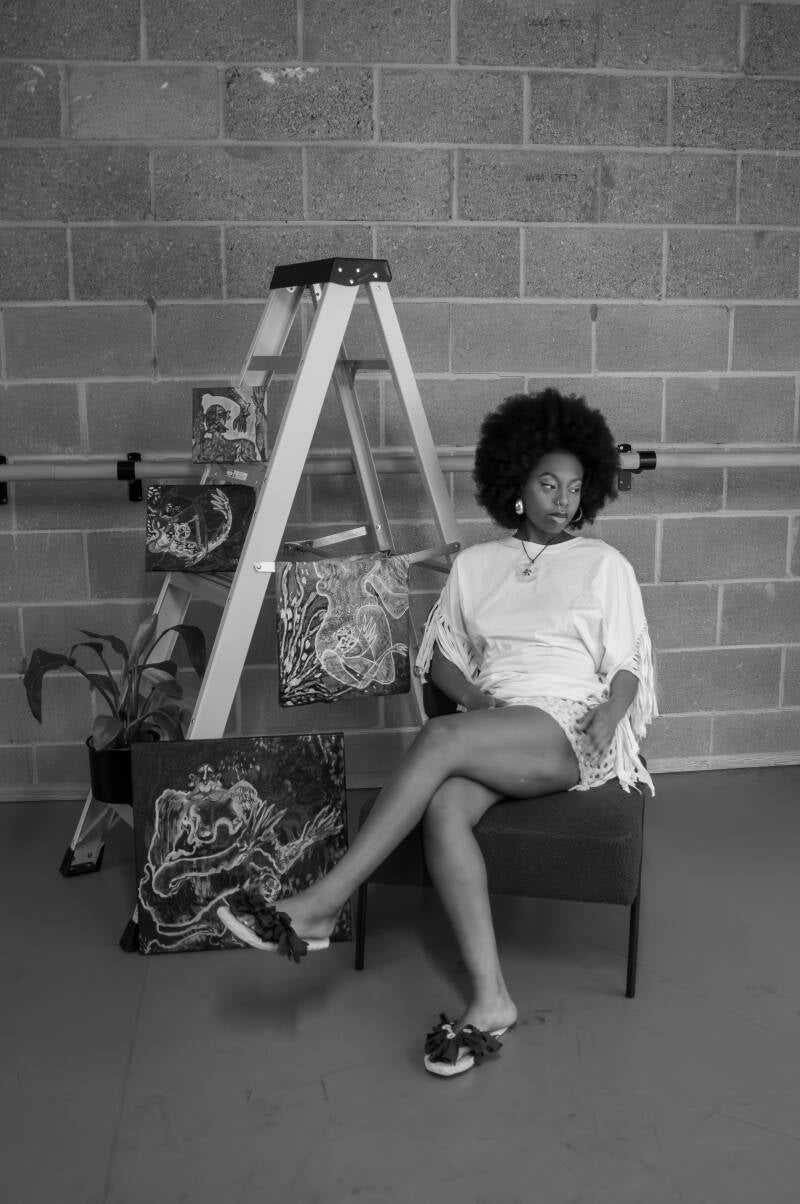
If you were to introduce yourself in one sentence, how would you do so?
"Ooh tough one. I’m Kandre I’m a Neo-surrealist visual artist and I like to draw with figurines."
"Outside of my art I am a lover of music, an inquisitive person, I’m driven by being curious of people. I was supposed to
do fine art at CSM (Central Saint Martins) but decided I wouldn’t get any value out of it, studying anthropology has
allowed me to develop my art finding out what my art means outside of the aesthetic.I used to paint really hyper
realistically and in a way studying anthropology has made me rebellious in terms of studying optics and visual
anthropology, we have skewed thinking based of what we see looking at surrealist work, looking below the surface level
is often difficult. When people think of anthropology they tend to think of a purely scientific practice. I studied visual
anthropology so could incorporate studying artists with it."
"I tried a lot of things when I was younger I played still pan and piano but was always drawn to art. I feel like other
creative expressions have an audience but with art you have more personal space. From early childhood I used to use
drawing as a way to express myself, my family often said I used to draw instead of vocalise an idea/thought.
I have synesthesia so I would draw portraits with myself with coloured halos and people were
often confused, I was confused why people were so confused until I realised that everyone didn’t have synesthesia."
In childhood who were your greatest inspirations?
"Groovy chick — groovy chick is not a person but a cartoon brand, the first thing I saw outside of barbie and I loved the
colour and expression. I think art is often refined in the way it’s portrayed. It taught me I don’t have to box myself I could
just be a groovy chick.
I also consumed a lot of tv growing up so That’s so Raven, Tracy Beaker, a lot of the organic shapes in my work and
how my art has a childish essence to it is inspired by this."
You mentioned declining your offer to study at CSM, often times in any industry the traditional way is if you get a
place to study at the best of the best school In terms of your career choice you do it no question- what made
you stray from this way of thinking?
"I did A Level art (art in your last two years of school/high school) and felt like my teachers were trying to push me in
certain direction and especially in terms of creating contemporary art they were trying to push me to a primitive way. I
thought I would be put in a box, representation for black women in art is already boxed and I didn’t want that for myself.
They almost in a sense unknowingly end up making creative industry plants."
Do you have a piece of work you feel most attached to?
"A portrait of my sister in my old style it is still very hyperrealistic with holes in it now, but my sister is like my kid and part
of me doesn’t want her to grow up. So I still have a strong attachment to it."
What was a time where you felt most proud of your work?
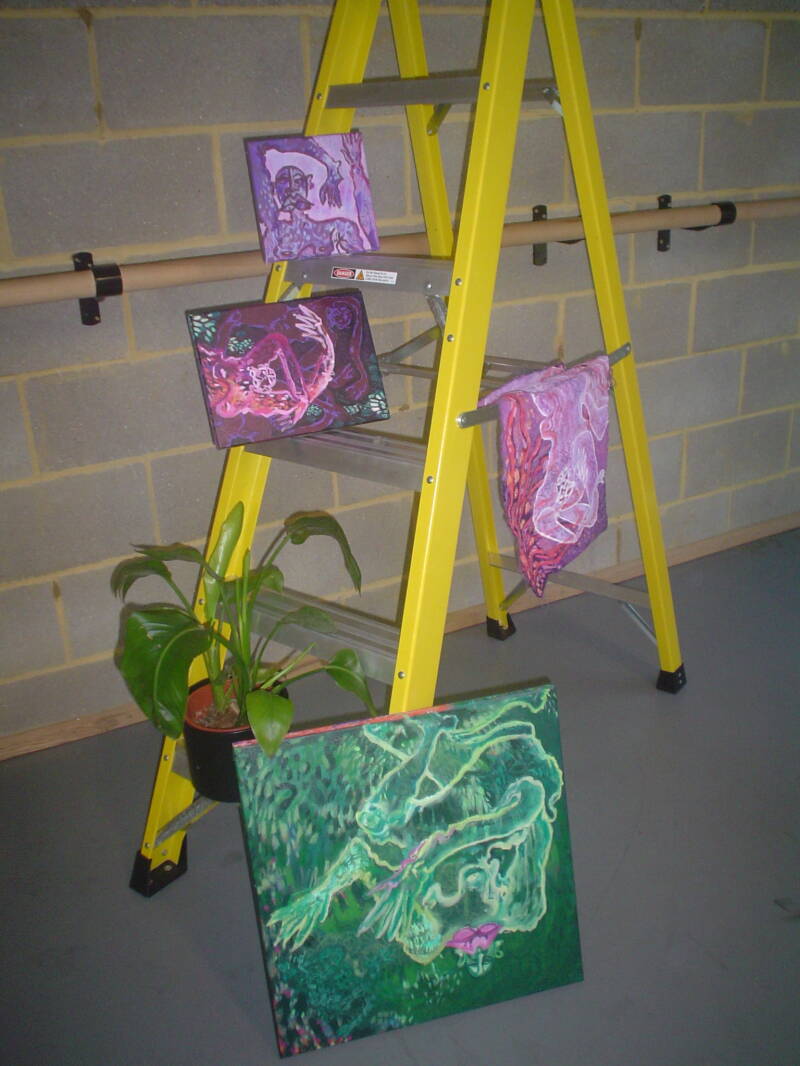
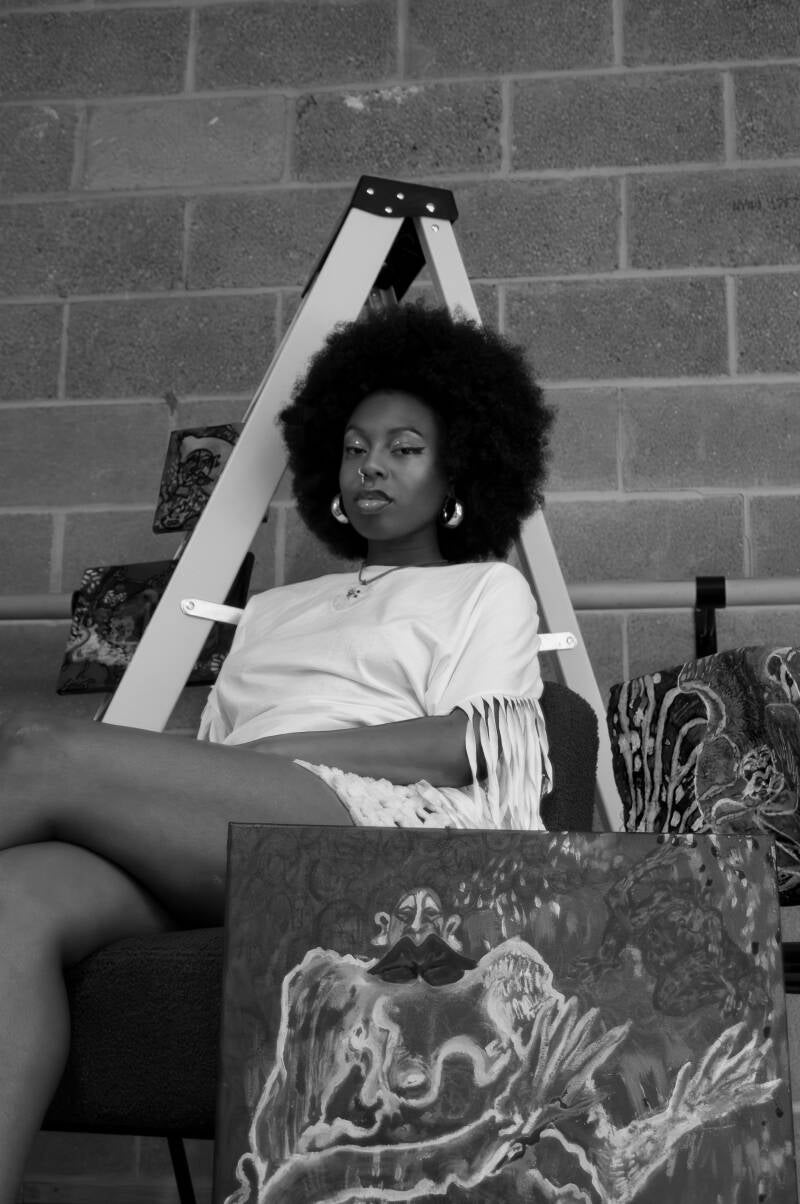
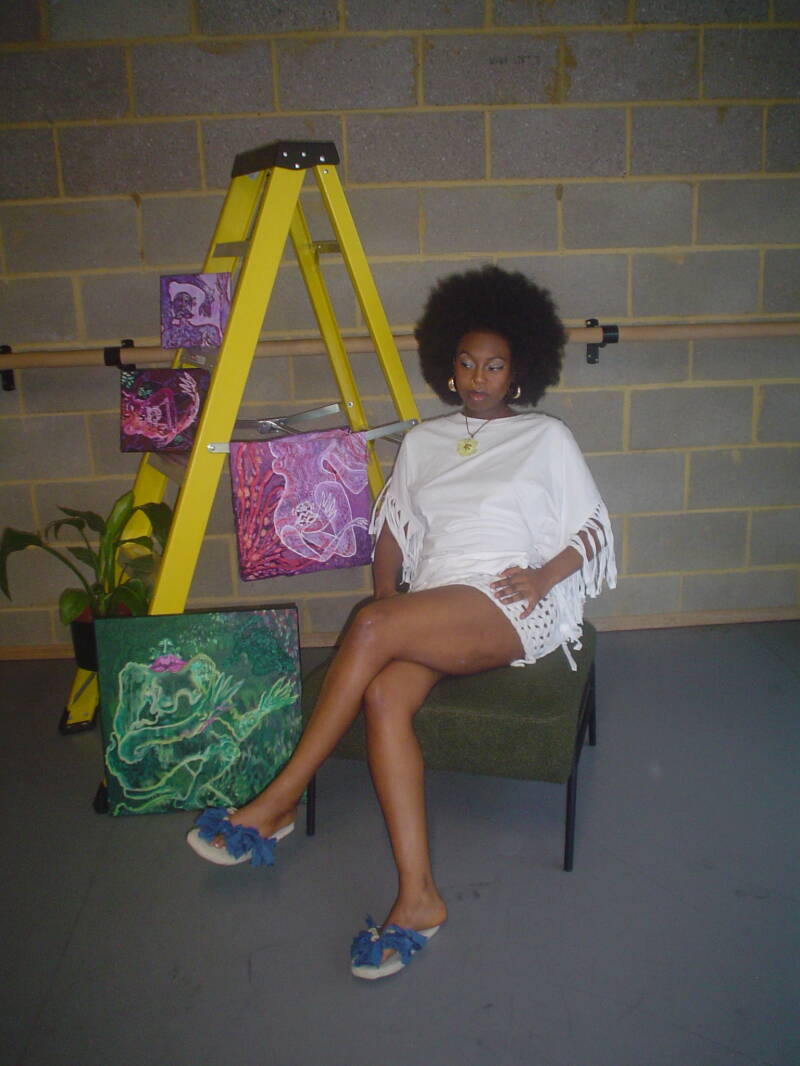
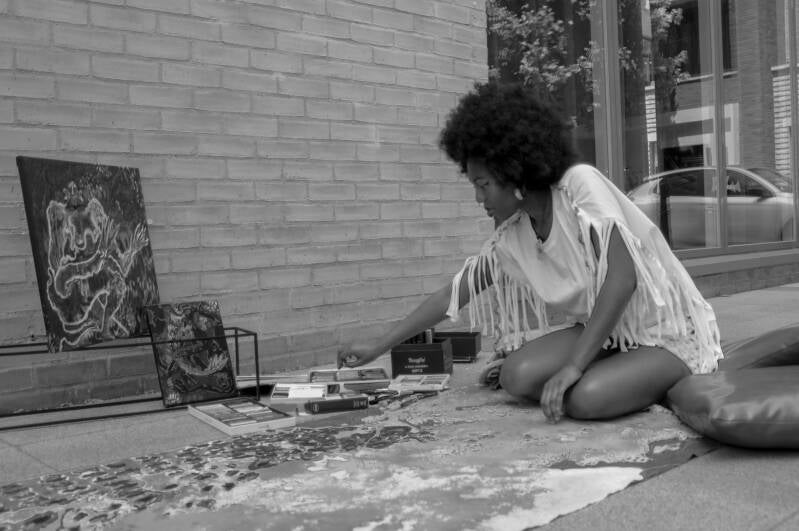
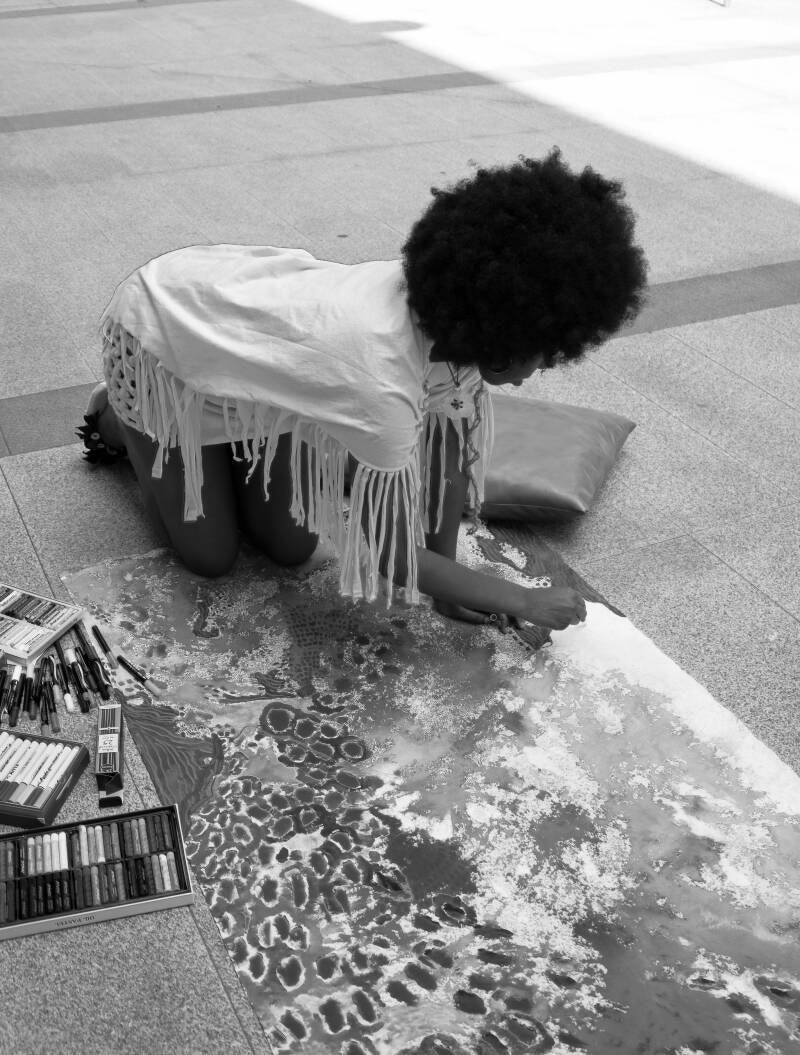
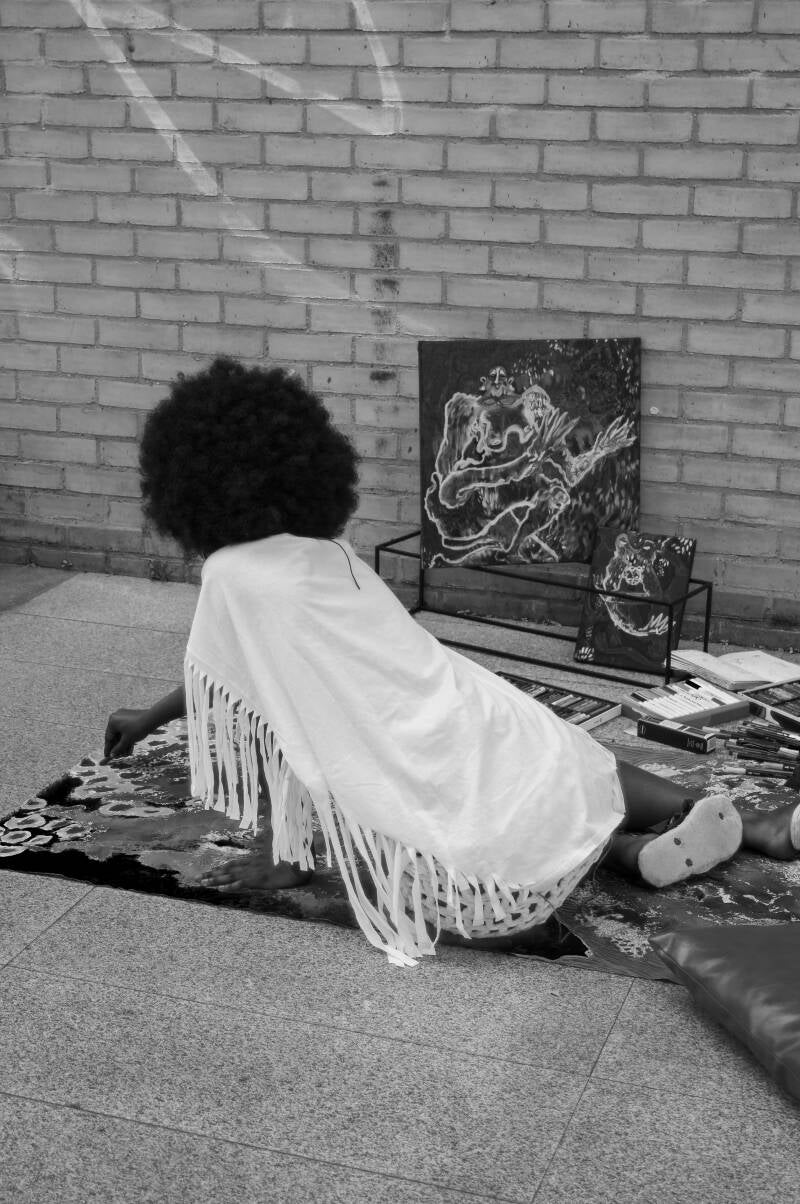
"At my last exhibition which is where I showcased the work that was at the shoot. It was the biggest exhibition that I
have been a part of it was like a group of like 35 artists and it was part of London Gallery Weekend. But not just
because of that but because it was the first time I felt comfortable enough to say yes I am an artist. Before that I was
doing it because I kind of had to as I was getting into the rhythm of showing my work- but there I finally accepted that
this was something that was my purpose- its bigger than me.
It’s humbling to know that what you create in the moment can just have a life of its own and grow based on how people
perceive it.
That’s where I had the eureka moment."
What do you think is missing from conversations surrounding African art?
"Joy….. I feel like— I was thinking about a lot of things in my head but I’m going to stick with joy. A lot of the time when
we think of African art there is always some really grim/gory story behind it. I just don’t understand why we can’t
celebrate work that is made out of pure joy. A lot of the time African art is made out of joy because we are trying to
escape all of the rubbish that is going on back home— all the economic rubbish political strife etc. Art is a lot of
people’s safe havens and I think it’s very upsetting that the art that does well is always dwelling on our short comings-
which is not fair. Of course it’s important to speak about things that are going on but I think we need to talk about
African joy a lot more."
Images © Àse Gallery. Artworks © Kandre Arámidẹ Hassan. All rights reserved. No part of this content may be reproduced without prior written permission.
Add comment
Comments